Quick answer: Virtual reality in education uses VR headsets and immersive 3D experiences to let students explore, practise and learn by doing. It improves engagement, understanding and memory, makes dangerous or expensive training safe, and gives remote learners hands-on experiences. Schools, universities and training institutes can start with VR apps, 360-degree content and web-based virtual labs.
Imagine students walking through ancient Mohenjo-daro, exploring the human heart from the inside or practising a science experiment without any risk. This is what virtual reality brings to the classroom. Instead of only reading or listening, learners experience a topic directly.
Bitlinks Tech is an AI-powered software, app and digital marketing company in Lahore that helps schools, academies and EdTech businesses in Pakistan, the UK and the US build modern digital learning platforms. Our website design and development services help education brands turn ideas like these into engaging learning portals and apps. This guide explains how VR is transforming education and how institutions can use it.
What Is Virtual Reality?
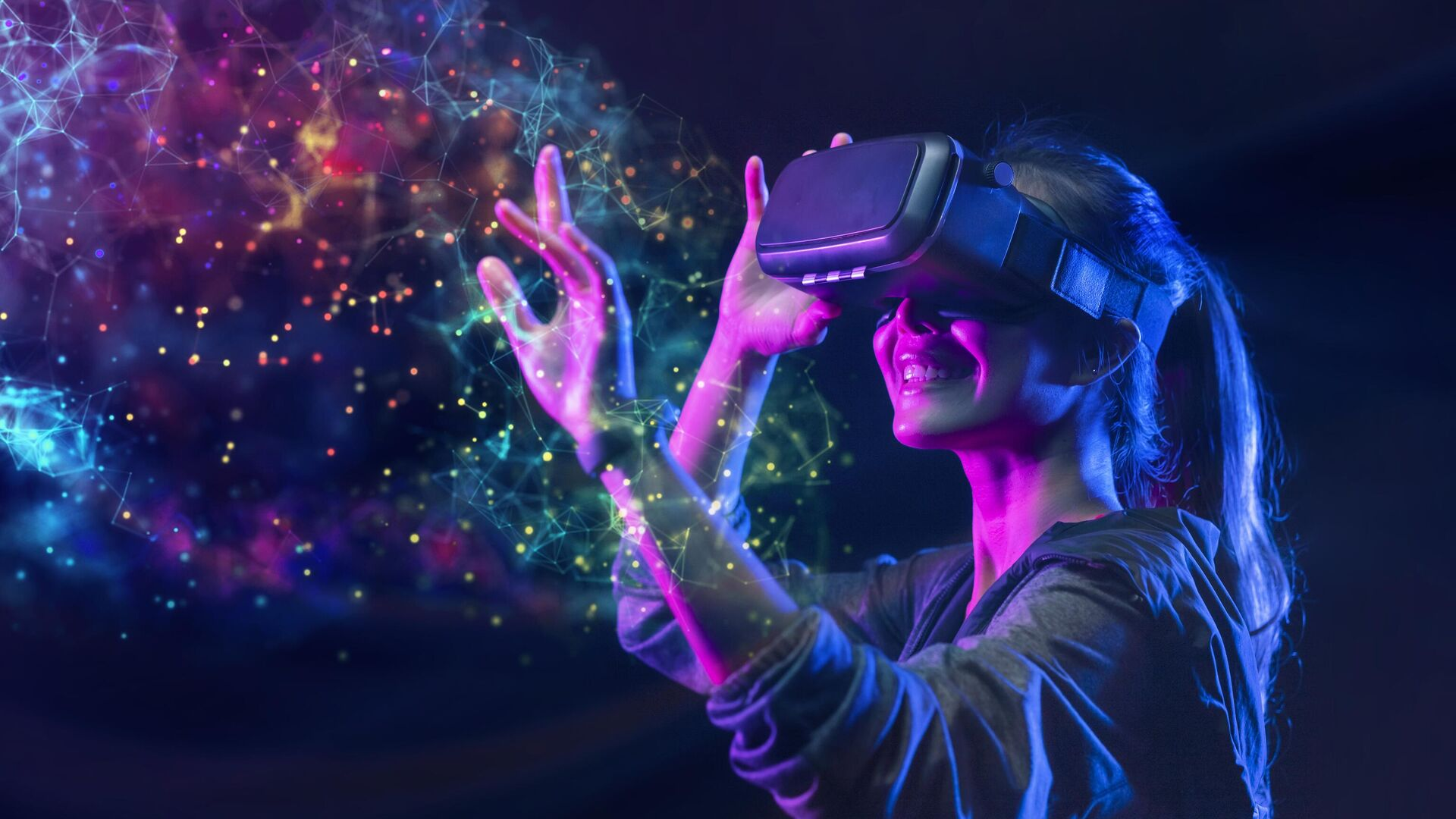
Virtual reality (VR) is a computer-generated 3D environment that users can explore and interact with, usually through a headset with motion tracking. Related technologies include augmented reality (AR), which places digital objects in the real world through phones or glasses, and mixed reality, which blends both. Together, they are often called extended reality or XR.
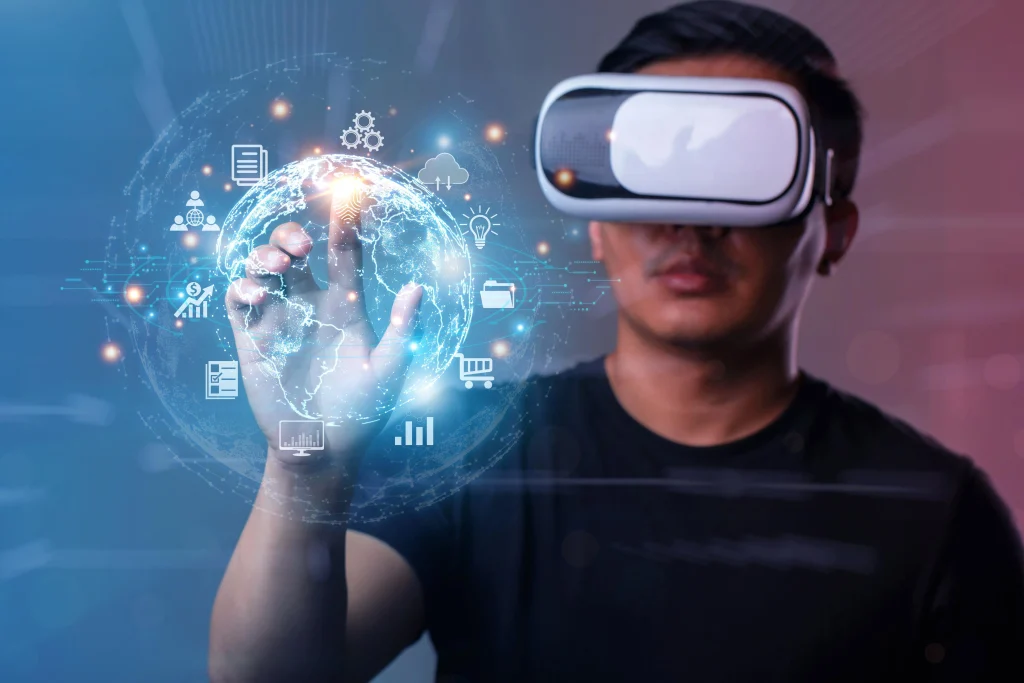
How Is Virtual Reality Used in Education?
- Virtual field trips: visit museums, historical sites, space and oceans without leaving the classroom.
- Science and virtual labs: run experiments safely and repeat them as many times as needed.
- Medical and nursing training: study anatomy in 3D and practise procedures before working with patients.
- Technical and vocational training: learn machinery, electrical work and safety procedures without real-world risk.
- Language learning: practise conversations in realistic virtual settings.
- Special education: create calm, controlled environments tailored to individual learning needs.
What Are the Benefits of Virtual Reality in Education?
Higher Engagement
Immersive experiences capture attention far better than textbooks alone, which helps students stay focused and curious.
Better Understanding and Memory
Seeing and interacting with 3D models makes complex topics such as anatomy, physics and geography easier to understand and remember.
Safe Practice
Learners can make mistakes in a virtual environment without danger, cost or damaged equipment.
Equal Access to Experiences
Students in smaller cities and remote areas can access the same virtual labs and field trips as those in major cities.
Personalized Learning
Combined with AI, VR experiences can adapt to each student's pace and track progress automatically.
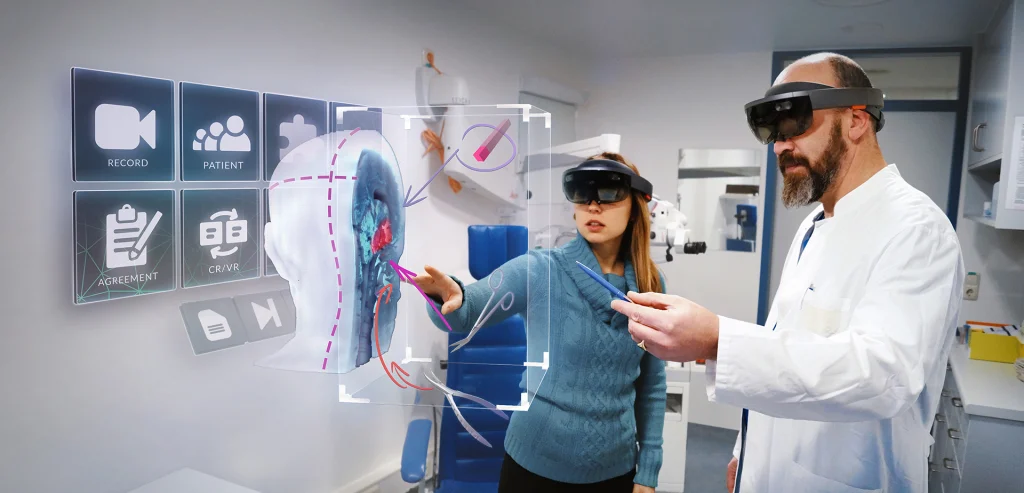
How Does Augmented Reality in Education Compare With VR?
Augmented reality in education is often the easiest first step. Students point a phone or tablet at a textbook page and see a 3D model of a planet, molecule or machine appear on top of it. No headset is needed, so AR works with devices families already own. A full VR classroom, on the other hand, offers deeper immersion and is ideal for simulations, virtual labs and practical training. Many institutions combine both: AR inside everyday lessons and VR for special sessions. With professional education app development, AR features can be added to a learning app, while e-learning website development connects these experiences to student accounts, assignments and progress tracking.
What Challenges Does VR in Education Face?
The main challenges are headset costs, limited local content, teacher training, internet requirements and health concerns such as motion sickness during long sessions. Institutions can reduce these issues by starting with affordable mobile VR, 360-degree videos and web-based 3D content that runs on existing devices, and by keeping VR sessions short and purposeful.
How Can Schools and Institutes Start Using VR?
- Set learning goals: choose subjects where immersion clearly adds value.
- Start small: pilot with a few headsets, smartphones or 360-degree videos.
- Use or build content: combine ready-made VR apps with custom content for your syllabus.
- Train teachers: help staff guide VR lessons confidently.
- Measure results: compare engagement and test scores before and after.
How Can Technology Partners Help EdTech Businesses?
VR works best as part of a complete digital learning ecosystem. A professional web design and development company can build the learning portal where students log in, access lessons and track progress. Our team also provides:
- Mobile app development: learning apps with AR features, quizzes and offline access.
- AI chatbots: 24/7 student support, admissions answers and course guidance.
- AI automation: automatic enrolment, fee reminders, attendance and progress reports.
- Graphic designing: engaging visuals and course materials.
- SEO and social media marketing: attract more students to your courses and institute.
Learn how AI is changing the wider landscape in our guide to artificial intelligence in Pakistan.
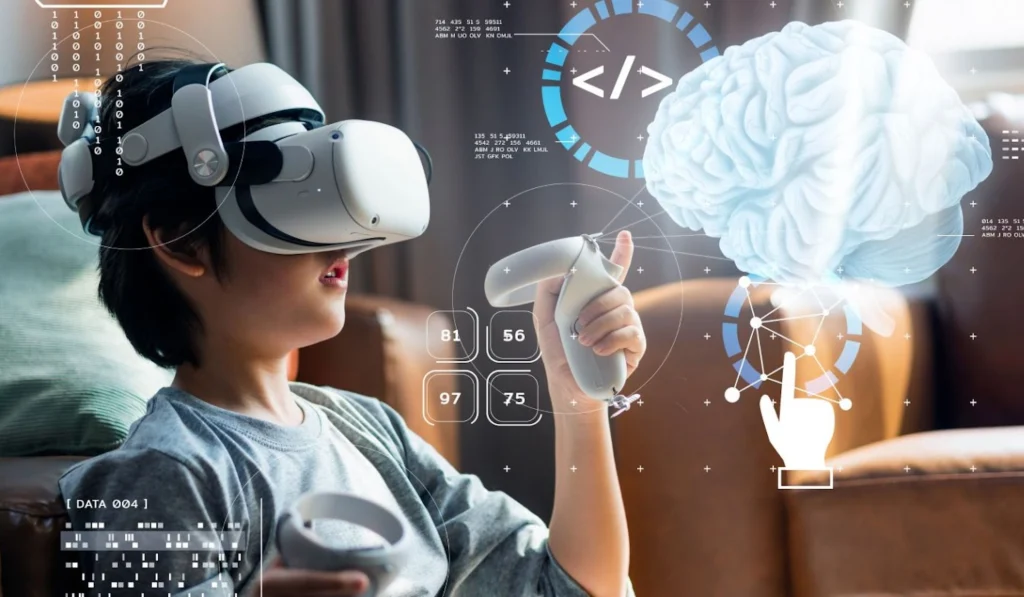
What Is the Future of VR in Education?
As headsets become lighter and cheaper and 5G and faster internet spread, VR will become more common in classrooms and training centres. Expect more AI-powered virtual tutors, collaborative virtual classrooms where students from different cities learn together, and AR experiences delivered through ordinary smartphones. Education brands that build strong digital platforms today will be ready to add these experiences tomorrow.
Do We Work With Local and International Education Clients?
In Pakistan, we build websites, apps and AI tools for schools, colleges, academies and training institutes in Lahore, Karachi, Islamabad and other cities. Internationally, we support EdTech startups and education providers in the UK, US and beyond with cost-effective development and clear communication. UK clients can also visit Bitlinks Tech UK.
Final Thoughts
Virtual reality in education makes learning more engaging, practical and accessible. While cost and content remain challenges, institutions can start small and grow step by step. The real advantage comes when VR is part of a complete digital learning experience supported by strong websites, apps and AI. When you are ready, explore our website design and development solutions for local and international businesses.
Build Your Digital Learning Platform With Bitlinks Tech
Planning an education website, learning app or AI-powered student portal? Contact Bitlinks Tech for a free consultation.
- Phone / WhatsApp: +92 300 1110031
- Email: info@bitlinkstech.com
- Address: Office # 3, First Floor, Link Arcade, Link Road, Model Town, Lahore, Punjab, Pakistan